

Updated on September 30, 2025
The 2026 FIFA World Cup is anticipated to draw some 6.5 million visitors in North America, and many host cities – Atlanta, Boston, Dallas, Houston, Kansas City, Los Angeles, Miami, Greater New York City (into New Jersey), Philadelphia, Seattle, and the San Francisco Bay Area – are grappling with where they’ll all stay. Hotels alone can’t meet the demand, putting short-term rentals back on city council agendas and reviving debates over how they should be regulated.
Local governments have split on their approaches to the dilemma. Some see the World Cup as a reason to relax STR rules temporarily and embrace the economic boost. Others fear the event will amplify noise, parties, and housing concerns and are doubling down on restrictions. The result is a patchwork of regulations that could shape the visitor experience city by city.
Filling the gap in Kansas City
Nowhere is the tension more apparent than in Kansas City, which will host six matches. The metro expects 650,000 visitors but has only 65,000 hotel rooms, according to Tyann Marcink Hammond, President of the Missouri Vacation Home Alliance. City officials quickly realized they needed help.
“They had reached out to the Kansas City alliance and said, ‘Hey, we are about 500 listings short of what we need. Will you help us bring new hosts to the area?’” Tyann said during an episode of the Alex and Annie Vacation Rental Podcast.

Kansas City is also looking beyond its city limits. Tyann said officials are focusing on a two-hour radius, where regulations vary dramatically. Some towns have temporarily lifted or are considering lifting restrictions that limit the number of short-term rentals.
Parkville, Missouri, for example, recently voted to lift its restrictions between May and July 2026. The town bans non-hosted rentals and caps the number of rentals allowed at any given building.
“They understand the economic benefits, and they want that in their community,” Tyann said.
In June 2025, Jackson County legislators proposed an emergency pause on reclassifying short-term rentals from residential to commercial properties. The reclassification tripled tax levies for some STR owners, and some operators decided to leave the market.
Laura Williams, Vice President of the Kansas City Short Term Rental Alliance, told KSHB 41 that her property tax bill for a two-bed, one-bath home had soared from $2,100 to $6,800 in a year, a more than three-fold increase.
“This is outrageous, and I absolutely will shut down prior to the World Cup,” she said in a press release cited by KSHB 41.
The alliance advocated for the pause, warning that thousands of local listings could disappear without relief.
The New York dilemma
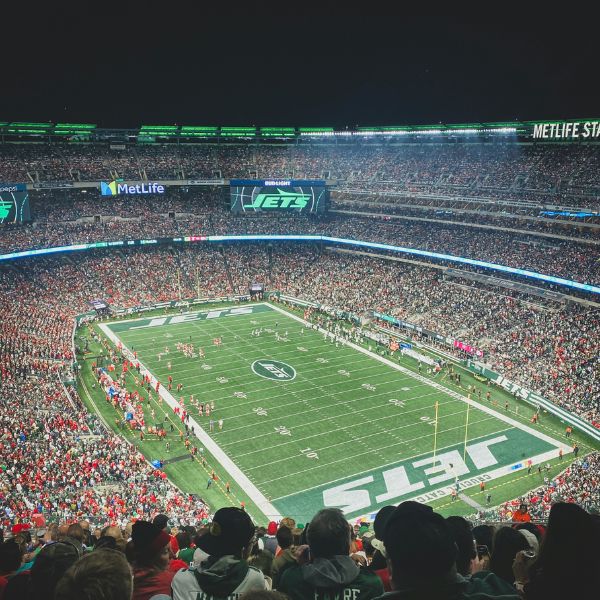
Other host cities like New York City may have too few short-term rentals because of strict laws. New York City’s Local Law 18, passed in 2023, effectively banned most short-term rentals, pushing demand into nearby Jersey City and Newark. But with the World Cup final set for MetLife Stadium in New Jersey, experts worry there won’t be enough beds.
Annie Holcombe, co-host of the Alex & Annie Vacation Rental Podcast, noted that while New York City has banned short-term rentals, nearby areas in New York and New Jersey have benefited from the spillover. Still, she said, it’s unlikely those markets will be able to meet the full demand expected for the World Cup final.
Annie suggested that STR alliances push for temporary suspensions of bans and caps, similar to what Parkville has done, so cities could “test out what it looks like to be able to toggle rentals on and off.”
Lessons from New Orleans
That kind of temporary toggle on-and-off of regulations in anticipation of a big event has precedent.
New Orleans deliberately delayed enforcing new rules cracking down on illegal rentals until after the city hosted the Super Bowl in February 2025.
As a result, short-term rentals helped capture demand that might otherwise have been lost, broadening the city and state’s economic gains. The event generated an estimated $1.25 billion in total economic activity statewide, spanning hospitality, retail, food and beverage, and related services, according to a study by Louisiana State University’s College of Business. The report found that the event supported roughly 9,787 jobs and added $395 million in wages while contributing $82.7 million in state and local tax revenue. Visitor spending on lodging, dining, shopping, and transportation totaled hundreds of millions.
Specifically, Short-term rental hosts in New Orleans during Super Bowl weekend earned an average of $1,450 per night, more than eight times their usual rates, according to Beyond, a revenue-management company. AirDNA data showed revenues from short-term rentals reached $10.5 million for just three nights surrounding the game.
Cities in limbo
Dallas
Short-term rental operators in Dallas remain in regulatory limbo just months before the World Cup sweeps into their city. In July 2025, an appellate court again ruled the City of Dallas’ ordinance banning short-term rentals in single-family neighborhoods was unenforceable.
The City Council passed the ban in June 2023, driven mainly by neighbor complaints about parties and nuisances. STR operators immediately challenged the ordinance in court, setting off a prolonged legal battle.
Operators say the lack of clarity is untenable with thousands of international visitors expected next summer.
“Short-term rental owners and operators want an ordinance,” said Lisa Sievers of the Dallas Short Term Rental Alliance. “The ball is in the City Council’s court right now.”
The City Council recently spent three and a half hours on the STR issue in a session closed to the public. With six new members since the 2023 vote, some expect the body to revisit the question.
“Dallas absolutely should get this taken care of before the World Cup,” District 7 Council Member Adam Bazaldua told NBC 5. “With FIFA coming, we are missing a great amount of revenue and a great amount of opportunity in our city if we do not get this fixed in time.”
Atlanta
Atlanta has spent years in regulatory limbo over short-term rentals, but the looming 2026 World Cup may spur the city to finally confront its stalemate.
The City Council first tried cracking down on “party houses” in 2020, then passed a broader ordinance in 2022 requiring licenses and taxes. Within days, however, the city suspended enforcement amid lawsuits and confusion.
Pressure is mounting as Atlanta prepares to host matches and fan events for the World Cup, according to 13 WMAZ.
“That really has put a new sense of urgency around this issue, to try to make sure that we have a licensing and a regulatory environment,” Council President Doug Shipman told 13 WMAZ.
Other metro-area jurisdictions have already taken action. Cobb, DeKalb, and Gwinnett counties have approved and begun enforcing short-term rental ordinances, including occupancy limits, annual inspections, and stricter nuisance penalties, the TV station reported.
Providing lodging for the influx of World Cup spectators will involve augmenting inventory and promoting and facilitating responsible hosting, Tyann said. For cities, that means balancing safety, enforcement, and housing concerns. For hosts, it means preparing for global guests.
“The more towns learn how short-term rentals work [and] how they can support the short-term rentals in their area, it’s going to get better,” Tyann said. “And all that comes down to education on both sides.”
…
GET UPDATES