
Updated on April 16, 2026
State legislatures nationwide are testing their power to shape the short-term rental market, targeting issues such as taxation, property rights, and local control.
In 2026, Idaho and Indiana limited local governments’ power to restrict the number of short-term rentals or to interfere with their operations. Proposals in Colorado and Washington failed after opposition from STR advocates and business groups. As of publication, many bills remain uncertain as lawmakers shift priorities late in the sessions.
Here are some of the major state-level short-term rental bills from 2026, organized by those enacted, those failed, and those still under consideration.
State STR bills that passed
Idaho
Statewide STR preemption law – House Bill 583
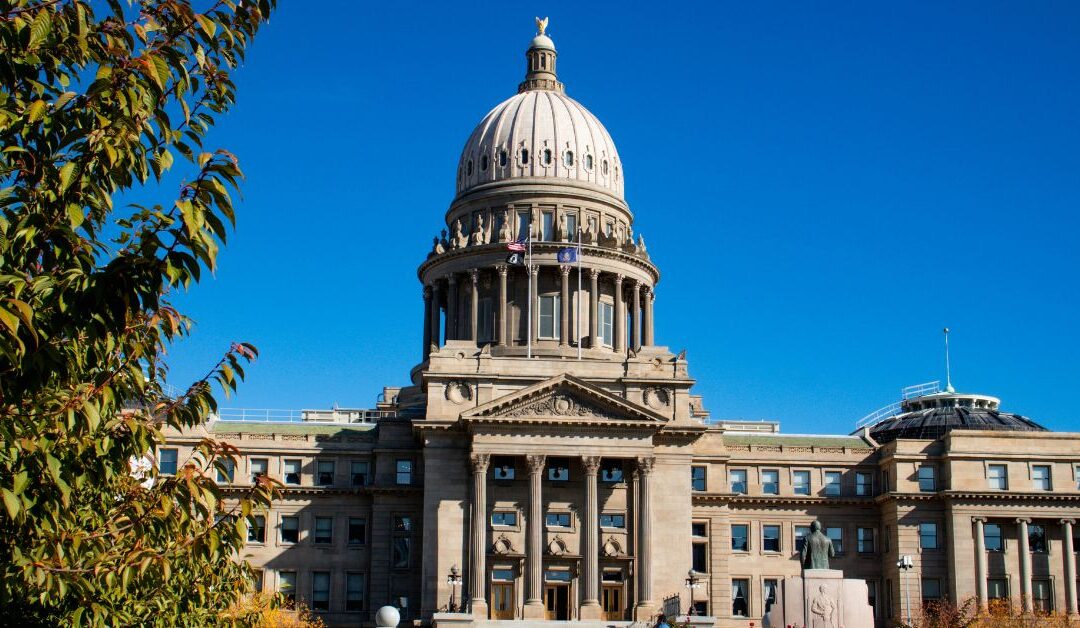
Idaho enacted a sweeping law limiting how cities and counties can regulate short-term rentals, requiring them to be treated the same as other residential uses. The law prohibits local governments from imposing rules that apply only to short-term rentals, including owner-occupancy requirements, caps on rental days or density, licensing requirements, and additional operational or reporting mandates. It also classifies short-term rentals as a “nontransient residential” use for zoning and building code purposes.
The law allows health and safety regulations, such as mandatory smoke alarms and fire extinguishers, emergency contact information, and occupancy limits. However, the regulations must be applied uniformly to short-term and long-term rentals. It also requires booking platforms to collect and remit state and local taxes and prohibits local taxes on marketplace operations.
Status: Signed into law by Gov. Brad Little on March 16, 2026; effective July 1, 2026.
Indiana
Ban on rental caps – House Bill 1210
Indiana enacted a law prohibiting cities and counties from capping the number of residential rental properties, a change that will prevent local governments from restricting the density of short-term rentals. The measure was tucked into an omnibus government finance package, House Bill 1210.
Status: Signed into law by Gov. Mike Braun on March 12, 2026; effective July 1, 2026.
State STR bills that failed
Arizona
Local STR regulatory authority – HB 2429
Arizona House Bill 2429 would have expanded the list of regulations cities and counties may impose on short-term rentals despite the state’s existing preemption law. The proposal would allow local governments to require permits or licenses, cap occupancy at two adults per sleeping area, plus two additional people, and suspend a license after three violations within 24 months or after a health or safety violation. It would also require jurisdictions that use local permits or licenses to adopt sex offender background check rules for booking guests, unless an online lodging marketplace performs the check.
Earlier versions reportedly included limits on the number of short-term rentals and distance requirements between properties, but those provisions were removed before the bill advanced to the Senate. Arizonans for Responsible Tourism said it remained neutral on the measure, noting that “much of the harmful language impacting operators has been removed,”
However, the bill failed to advance in the Senate as the Appropriations Committee did not hold a hearing on it before the final committee deadlines on March 31.
Status: Passed the Arizona House on March 16, 2026, but failed to meet the required deadlines in the Senate to advance this session.
Colorado
Vacancy tax authority – House Bill 1036
Colorado House Bill 1036 would have authorized counties and municipalities, with voter approval, to tax residential properties deemed vacant and use the revenue for affordable, attainable, or workforce housing. Even though licensed short-term rentals were exempted under the bill, opponents said it created uncertainty for owners in capped local licensing systems and warned it would be difficult to administer.
Status: Postponed indefinitely by the House Finance Committee on Feb. 9, 2026.
Maine
Consumer Data Privacy – LD 1822
The Maine House of Representatives rejected a proposal that would have imposed new restrictions on how companies collect, use, and share personal data, ending a closely watched effort to expand consumer privacy protections.
The bill would have limited the use of targeted advertising and required businesses to provide greater transparency and control over personal data. The measure drew ardent opposition from the business community, including the Vacation Rental Professionals of Maine (VRPOMe). Opponents argued the restrictions would make it more difficult to reach customers and compete in a digital marketplace.
After the Senate narrowly advanced the bill 18-14, the bill failed in the House on its final vote. “The organized, unified response from Maine’s business community, which grew from roughly 150 voices to more than 400, made the difference,” the VRPOMe reported in their April newsletter.
Status: Failed in the House on April 13, 2026.
New Mexico
Short-term rental property tax classification – Senate Bill 149
Senate Bill 149 would have codified that residential rental properties, including short-term rentals, must remain classified as residential for property tax purposes rather than commercial. The proposal sought to address inconsistencies across counties, where some assessors have reclassified short-term rentals as nonresidential, leading to higher tax bills for those property owners.
The bill drew support from the New Mexico Short-Term Rental Association, which has been advocating for a statewide approach to tax classification.
“The New Mexico short-term rental association is advocating for a comprehensive statewide approach to STRs in tax classification so that each individual county tax assessor cannot determine their own reclassification from residential to nonresidential/commercial,” said Kris Leslie-Curtis, a member of the association’s board. “Ideally, we would like to see a preemption much like Arizona has done, but that’s quite an uphill battle here in New Mexico.”
Despite support for the proposal, the bill did not advance before the Legislature adjourned on Feb. 19, 2026. Industry advocates say the proposal is likely to return in 2027, with a similar bill.
Status: Did not advance before adjournment of the 2026 legislative session.
Washington State
STR Excise Tax – House Bill 2559
Washington House Bill 2559 would have authorized local governments to impose an excise tax of up to 4% on short-term rental bookings, applied only to STRs and layered on top of existing lodging taxes. Supporters framed the proposal as a way to generate additional local revenue, while opponents argued it would disproportionately impact small hosts and local tourism economies.
The bill drew significant engagement from short-term rental advocates, with more than 250 individuals speaking out, and the majority of testimony coming from opponents. The Washington Hosts Collaborative Alliance (WHCA) said host participation helped ensure policymakers better understood how targeted taxes could affect small operators and local communities.
Status: Did not advance before adjournment of the legislative session on March 12, 2026.
Pending state STR bills
Hawaii
Platform tax collection – House Bill 1590
Hawaii House Bill 1590 would require short-term rental platforms that collect booking fees to register as tax collection agents and collect and remit state general excise and transient accommodations taxes on behalf of operators. The bill also authorizes counties to use transient accommodations tax revenue for STR regulation enforcement and the use of time-stamped screenshots as evidence.
Status: Progressing in the Senate with committee amendments as of late March 2026.
Kentucky
Statewide STR preemption – Senate Bill 112
Kentucky Senate Bill 112 would limit how local governments regulate short-term rentals, prohibiting measures such as conditional use permits, density caps, residency requirements, and restrictions on where or when short-term rentals may operate. The bill would also ban caps on the number of properties an operator may manage and curtail local regulation of short-term rental platforms.
The proposal would still allow health and safety regulations but void any local ordinances that conflict with its provisions.
Status: Introduced and assigned to the Committee on Committees; no further action as of late March 2026.
Minnesota
Short-term rental platform guarantees – SF 4157/HF 3972
These companion bills would require short-term rental platforms offering host or guest guarantees to register with the state and back their guarantees with insurance as well as disclosure requirements. The Minnesota Short-Term Rental Association supports the House bill, calling it “a balanced approach that promotes innovation while enhancing transparency and consumer protections for Minnesota’s short-term rental community.”
Status: Advancing through committee in both chambers.
Missouri
STR tax classification – SB 1066/SB 1001/HB 1768
Missouri lawmakers advanced legislation that would classify most short-term rental properties as residential for tax purposes. The provision is contained in three different pending bills: SB 1066, SB 1001, and HB 1768. It would apply to single-family homes rented for fewer than 30 consecutive days, with a cap of 15 properties per owner. Assessors would also be required to consult the property owner before attempting to reclassify a property.
Tyann Marcink Hammond, President of the Missouri Vacation Home Alliance (MOVHA) and Owner of Branson Family Retreats, said some assessors have used a loophole in state law to change short-term rentals’ tax classification to commercial, resulting in property tax bills “as much as three times more than the previous year.”
These bills are reiterations of a similar proposal, HB 1086, introduced in 2025, which didn’t reach a final vote before the end of the legislative session but had enthusiastic support.
Status: SB 1066 passed the Senate 30-to-3 on March 25, 2026, and moved to the House, where it is under consideration by the House Special Committee on Tax Reform. HB 1768 was expected to receive a vote in the House during the week of March 30, 2026, and SB 1001 was scheduled for a hearing in the Senate Fiscal Oversight Committee on March 30, 2026.
New Hampshire
Property owners’ bill of rights – House Bill 1619
New Hampshire House Bill 1619 would establish a “property owners’ bill of rights,” affirming that property owners may use their property as they see fit, so long as it does not harm others, while limiting municipal land-use regulation to what is necessary for public health and safety. The bill would also restrict local zoning authority, prohibit rent control, and repeal the state’s workforce housing program.
While not specific to short-term rentals, the proposal could make it more difficult to justify certain local restrictions by reinforcing property owners’ rights to use and lease their homes.
Status: Introduced and referred to the House Housing Committee; public hearing held Feb. 3, 2026.
Ohio
Statewide STR preemption, tax expansion – SB 104/HB 109
These two companion bills would limit local regulation of short-term rentals, including bans and occupancy restrictions, while requiring lodging taxes to be applied to STRs and collected by platforms.
Status: Assigned to committees in 2025; no votes had been taken as of late March 2026. The last hearing on HB 109 was on March 18, 2026, in the House Development Committee. The Legislature remains in session through December 2026.
Pennsylvania
Regulations for short-term rentals – House Bill 2303
House Bill 2303 would create statewide requirements for short-term rentals in Pennsylvania, including permitting, insurance, safety standards, and registration.
Status: Introduced and assigned to the Tourism, Recreation & Economic Development Committee on March 19, 2026.
…
GET UPDATES