
Updated on November 3, 2025
The debate over whether short-term rentals are residential or commercial has played out in courtrooms, legislatures, tax assessors’ offices, and local planning departments. The answer carries real consequences. If short-term rentals are treated as residential, owners can keep their property taxes aligned with those of their neighbors, face fewer zoning hurdles, and operate under traditional housing rules. If a short-term rental is treated as commercial, the ground shifts underfoot. Property tax bills may triple overnight, zoning may become stricter, insurance carriers may reassess coverage, and homeowners’ associations or cities may further restrict or ban where they operate.
This dogged question has become one of the defining battles of this regulatory era, shaping how hosts run their businesses and how communities regulate them. This article will examine how courts, legislatures, municipalities, and HOAs across the country are wrestling with the issue and why no clear consensus has yet emerged.
Home or business?
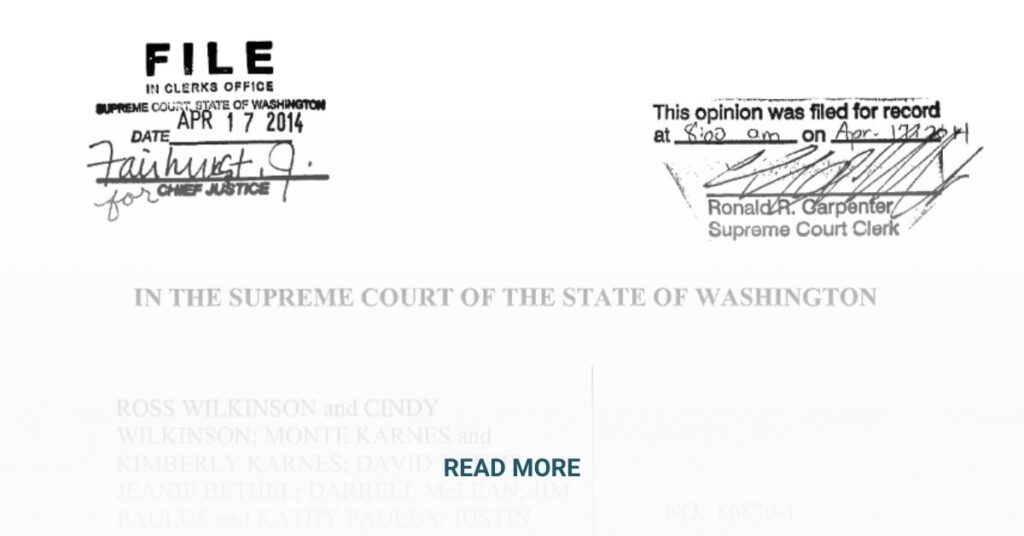
Several courts have concluded that renting a dwelling by the night does not constitute a commercial use of a home. In Wilkinson v. Chiwawa Communities Association in 2014, the Washington Supreme Court held that short-term stays did not strip a home of its residential character. Guests still used the building to eat, sleep, and gather, so a broad “residential use only” covenant could not be stretched to prohibit short-term rentals outright.
Other courts have gone the other way. In Edwards v. Landry Chalet Rentals LLC in 2018, the Court of Appeal of Louisiana singled out advertising, profit motive, and commercial insurance as reasons a vacation rental is considered commercial.
Likewise, in 2025, the Montana Supreme Court sided with a subdivision that barred short-term rentals under a “no commercial use” covenant, likening frequent, transient turnover to apartment-style operation and elevating nuisance concerns.
Yet, in a similar dispute five years prior, the same court ruled that a “residential purpose only” covenant was ambiguous and did not prohibit short-term rentals.
The pattern, if one exists, is that outcomes hinge on state law and the precise wording in deeds, covenants, and local codes. Even in Montana, the justices signaled that more explicit statewide definitions would reduce litigation by giving owners and communities a shared rulebook.
Legislative efforts
Because litigation leaves wide gaps, some statehouses have considered writing their own answers.

In Missouri, House Bill 1086 in 2025 would have clarified that single-family homes are residential for property tax purposes regardless of the length of stay. The logic behind the legislation, sponsored by the Missouri Vacation Home Alliance (MOVHA), is that “the use of the property is residential, whether it’s three nights or three years,” explained Tyann Marcink Hammond, MOVHA President and Owner of Branson Family Retreats.
“Yes, there is business activity, but it does not happen at the short-term rental property,” she said. “The business activity of marketing, accounting, and customer service happens elsewhere.”
The bill breezed through the House of Representatives with bipartisan support and passed unanimously through the Senate Committee before stalling due to an abrupt end to the 2025 legislative session. While MOVHA plans to refile the proposal in 2026, some county assessors have already begun taxing short-term rentals at the commercial rate.
Tyann warned that unchecked reclassification “has caused hosts to reevaluate if it is worth the tremendous amount of work to have a short-term rental,” noting that some owners received property tax bills “as much as three times more than the previous year.”
In New Mexico, the same debate has moved from the courts to county assessors’ offices. “County by county, individual assessors are starting to target short-term rentals to move them from residential use to nonresidential or commercial use,” said Kris Leslie-Curtis, President of the New Mexico Short-Term Rental Association (NMSTRA). “The counties that have already begun implementing this are Santa Fe County, Bernalillo County, Taos County, and Lincoln County, and this trend is catching on with other county assessors across the state.”
The rules vary widely. “In Santa Fe, if you rent your short-term rental more than 183 nights a year, you will be reclassified as nonresidential or commercial,” Kris explained. “There is inconsistency between the counties on how assessors determine the criteria for reclassification…, but they claim it is made by ‘predominant use.’”

To address that patchwork, NMSTRA and the New Mexico Association of Realtors successfully advocated for the creation of House Memorial 52, which established a statewide study group to examine the property tax issue and provide recommendations. The task force comprises representatives from state agencies, county assessors, and a select group of short-term rental advocates.
“The majority of the participants are on the government regulatory side,” Kris said. “We may be slightly outnumbered in this work study group, but we are backing up our requests and claims with data-driven information.”
Kris said the push is driven by tax assessors “taking it upon themselves to increase their tax revenue” and a “false narrative that short-term rentals reduce affordable housing.”
The result could be financially devastating for local hosts.
“The financial consequences of property tax reclassification from residential to nonresidential/commercial will result in an approximate 30% increase in taxes for owners annually,” she said. The change also removes the state’s 3% property tax cap and could even trigger mortgage issues for owners whose loans are written for residential properties.
“This will significantly reduce the number of short-term rental hosts in the state,” Kris warned. “There aren’t enough hotel rooms to accommodate the number of tourists that visit New Mexico annually.”
NMSTRA is advocating for a legislative solution that would establish statewide protections and prevent counties from unilaterally reclassifying short-term rentals as commercial.
“We are working to protect the STR community in New Mexico, which is mostly comprised of individuals who have become STR operators to supplement their income and who also have contributed to over $1 billion in taxable revenue to the state of New Mexico,” Kris said. “Running short-term rental hosts out of business with unfair taxation will ultimately result in less tax revenue for the state and counties of New Mexico.”
Building codes and life-safety rules
A separate but related question is whether short-term rentals trigger the application of commercial building code standards. The International Code Council draws a distinction between residential one- and two-family dwellings, which are covered by the International Residential Code, and larger, transient lodging uses, which are covered by the International Building Code.
“Renting a single-family home to a long-term tenant should be treated no different than renting a single-family home to a short-term tenant (tourist) from an overall building code perspective,” wrote David Spencer, President of the International Code Council and a building official in Washington State, in a LinkedIn article published in April 2024.
Commercial building codes do not apply to short-term rentals unless a city or county enacts additional restrictions within the limits of state law, he added. Not all states allow such local changes. New Jersey, for example, enforces a Uniform Construction Code statewide, and local jurisdictions are not authorized to amend it, according to ICC Safe.
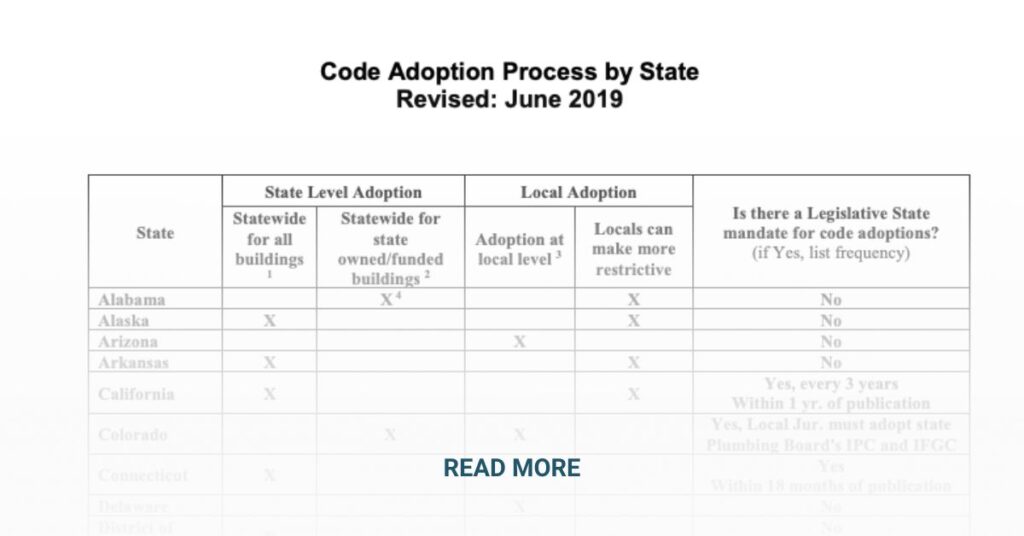
In Washington State, local governments can make limited adjustments, such as requiring sprinklers in certain homes, but only within state-approved boundaries, David said. They cannot rewrite or override the state’s adopted IRC unless they follow a formal amendment process. The IRC itself is a standalone rulebook governing every aspect of one- and two-family home construction, remodeling, and maintenance from foundation to roof.
Land use laws can still restrict where short-term rentals operate, such as limiting them to commercial zones; however, these zoning rules do not alter the IRC classification of a single-family home or the standards that applied when it was built.
What can hosts do now?
Until more consistency emerges, a single dispute can determine how your property is classified. As Missouri and New Mexico debates show, that decision often arrives as a tax bill or a citation, not a headline. As such, it’s important for short-term rental operators to stay abreast of local ordinances and laws and to advocate for a statewide law that ties classification to use.
…
GET UPDATES