
Updated on February 17, 2026
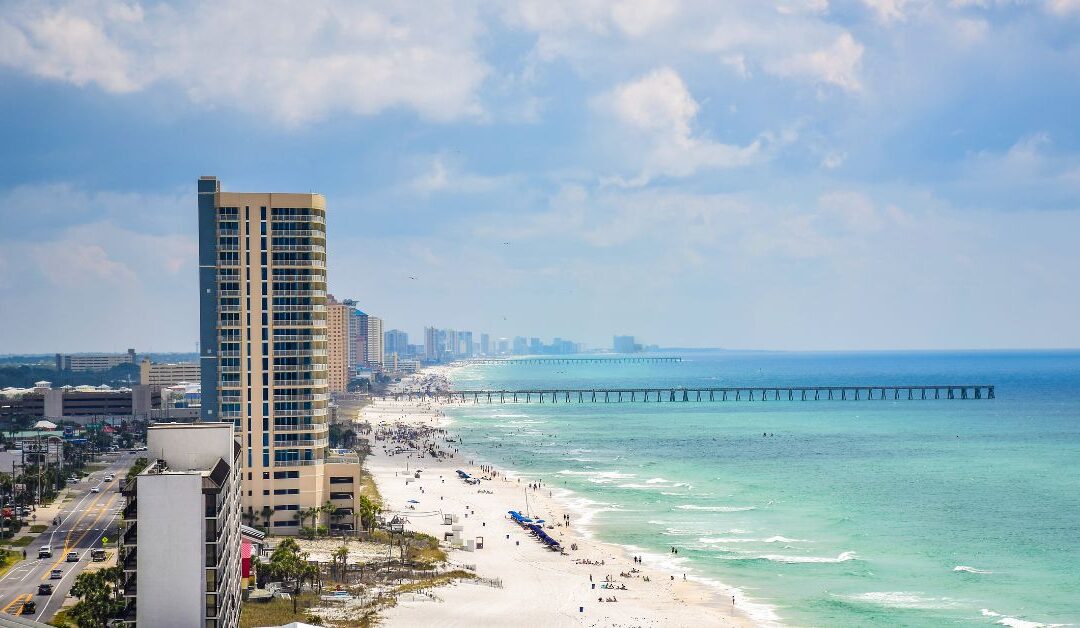
For nearly a week after Hurricane Michael tore through Panama City in the Florida Panhandle in October 2018, Annie Holcombe couldn’t make a phone call. The Category 5 hurricane wiped out power and cellphone towers, disabled water systems, destroyed 1,500 buildings, and damaged more than 45,000 others in just Bay County, according to the National Hurricane Center. The National Guard, Annie recalled, resorted to using personal phones when they could find a signal. Remarkably, most vacation rentals on Panama City Beach sustained little to no damage.

“But the staff was all displaced,” said Annie, a former property manager who is now a short-term rental operations consultant and co-host of Alex & Annie: The Real Women of Vacation Rentals podcast. “This taught [property] managers to have a backup plan for staff.”
That contradiction of intact homes but broken systems captures the reality of sudden market closures. Whether caused by a hurricane, a public health emergency, or an environmental event, market shutdowns expose how dependent short-term rentals are on people, communication, and cash flow. Operators who plan for these scenarios often recover faster.
Safety first
When a closure occurs, prioritizing safety over potential revenue loss is critical.
“Safety of staff and guests is the number one priority,” Annie said. “Never put any of your team in harm’s way” to preserve bookings or avoid cancellations or refunds.
Despite mandatory evacuations, some residents and property owners may still choose to remain in the area. She recounted the advice emergency responders often give to those who refuse to evacuate: “They tell you to write your ID and Social Security number on your arm.” These kinds of grave reality checks may be necessary when dealing with owners, guests, or staff who are resistant to evacuating.
But even if a guest or owner insists on staying, never place your staff in a position where they have to support that choice.
Read more: How to choose the best vacation rental cancellation policy
Communication calms panic
Tim Cafferty, President of Outer Banks Blue and Sandbridge Blue in North Carolina, remembers the early days of the Covid-19 shutdown vividly.
“It was a Tuesday. March 17, 2020,” said Tim, who co-hosts The Vacation Rental Key with T and T podcast.
He had been watching Europe’s vacation rental markets shut down and briefly hoped his region might be spared. Then a friend told him the local emergency management group was meeting.
“By 9 a.m., I got word that the beach was shutting down access to the Outer Banks at 2 p.m. that day,” he said. “It was surreal.”
“The first thing I did was try to remain calm and ensure our guests that were in residence were communicated with about the situation.”
Almost overnight, his company became an information hub. The team sent daily emails and texts to owners and recorded video updates for owners, guests already in-house, and those scheduled to arrive.
“Not knowing what the future held was the biggest challenge,” Tim said. “Would the bridges be closed for a week? A month? Six months?”
Rent Responsibly COO Alexa Nota had similar experiences as a former property manager on Hatteras Island.
“We had a protocol for hurricanes that, once forecasts showed one potentially coming our way, we began proactively communicating with guests expected to be on the island around its arrival.”
Her team would communicate the latest expectations and proactively answer frequently asked questions, such as whether they would still be able to access their vacation rentals, what would happen if their reservations were canceled, and how travel insurance worked, she said.
But once during her time there, they experienced a surprise shutdown when construction on the bridge to the island struck power lines, cutting off power to the entire island for what turned out to be two weeks in the peak of summer.
“That was new. Once we learned power couldn’t be restored right away and got our office generators up and running, we had to evacuate everyone and tell incoming guests they couldn’t come,” she said. “It was a scramble at first, but then all the same principles applied: communicate often, clearly, and with empathy.”
No matter how bad the news, vacation rental experts recommend not trying to sugarcoat reality; keep the information flowing.
“It’s always best to be honest and transparent, especially in the social media age we are living in,” Annie said.
Tim’s decision to provide daily updates to staff, owners, and guests is exactly how property managers and hosts can promote calm and safety.
“When you don’t have information…, people spiral,” Annie said. “Owners particularly, because they want to know immediately … what’s my unit look like?”
Communication can break down when a host or property management firm lacks an emergency plan. Emergency plans help managers decide roles before a crisis hits: who communicates with owners, who handles guest messaging, who are their backups, and where updates will live if offices, phones, or internet access go down.
“Do not wait for the owner to reach out,” Annie said. “Be ahead, anticipate questions.”
Take care of your team
Beyond enforcing evacuation or social distancing orders, property managers in the wake of a market shutdown can help create stability by supporting their team.
Without knowing how long his market would be closed, Tim made a decision that would ultimately strengthen his team and the greater community, which was destabilized by the Covid 19 shutdown.
“I immediately told staff that everyone would remain employed,” he said.
The Outer Banks was closed for eight weeks.
“We had zero income,” Tim said. Despite his own fears of financial collapse under the pressure, he kept everyone on a full wage.
To stay busy, the team found projects.
“We invented ways to keep our staff employed and engaged,” he said. “We painted the office. We cleaned everything and made sure every vehicle was in tip-top condition.”
Four weeks into the closure, one employee came to him in tears.
“I am the only person in my family that is employed right now, and I just want to thank you,” the employee told him.
Another employee was asked to paint siding that didn’t really need painting.
“The employee said, ‘Are you sure you want me to paint this?’” Tim recalled. “I said, ‘Yes, and take your time doing it because I’m not sure how many other jobs I have for you.’”
The employee’s response stayed with him: “Thank you, this is the most detailed paint job you will ever see.”
“As a company owner, it was not an easy decision… but it was the right decision,” Tim said.
Read more: Hospitality Heroes: Nonprofit helps hospitality workers weather any storm
Keep cash on hand
Closures expose financial weaknesses quickly, especially when you may owe guests refunds and revenue flow dries up.
Going into the Outer Banks shutdown, “I had no financial reserves to speak of,” Tim said. “We operated on a lean budget that relied on us having a constant cash flow.”
The timing was personally brutal. He was renovating his home and living in a rental.
“Financially, it was terrifying,” he said.
Keeping available cash on hand is vital during a market shutdown.
“You’re going to need cash to be able to pay vendors,” Annie said, “because you can’t wire money… the credit card machines aren’t working.”
Even without a formal disaster reserve, she said, keeping reservation funds separate from operating accounts (a concept known as trust accounting) and maintaining accessible cash can make the difference between recovery and collapse.
Annie explained that one of the most common structural failures during a crisis is commingling funds, meaning using future guest money to cover operating expenses.
“If you don’t have the money to refund and it becomes a situation where you need to refund, you don’t have the money there,” she said.
Read more: Guide to emergency preparedness for vacation rentals
Insurance is limited
Many operators assume that a sudden market closure will trigger insurance coverage. Tim learned otherwise during the Covid shutdown.
“What insurance?” he said. “There was no insurance to cover this kind of event.”
Some owners attempted to file claims under rent protection or loss-of-rent policies, he said, but ran into exclusions or denials.
“My experience is that it is very difficult to collect on loss of rent insurance for owners,” Tim said.
Annie echoed that concern, noting that storms and environmental events like red tides often fall under “Act of God” exclusions. In those cases, she said, operators should plan as if refunds and recovery will largely be their responsibility, both financially and operationally.
One way to prepare is to talk to your insurer now to find out which worst-case scenarios are covered, consider specific loss-of-income policies, or build a nest egg to insulate your funds against such catastrophes.
Read more: How to get short-term rental homeowners insurance after nonrenewal
Reopen with caution
When access returns, resist the urge to reopen immediately, Annie advised.
Opening too soon is one of the biggest mistakes she sees operators make.
“Staff has likely been affected, and they are emotional, stressed, and potentially homeless.”
Even when vacation rentals come through a closure intact, the community around them often hasn’t. In some cases, infrastructure, staff housing, and basic services can all take longer to recover than the properties themselves.
In Annie’s experience, bookings often immediately rebound when a market reopens.
“Usually it’s a boom as loyalists and looky-loos want to support or see what things look like,” Annie said.
Keep the hope
For operators who have never lived through a sudden market shutdown, closures can help pressure-test your business, values, and protocols.
“There are seminal moments in a business and in a person’s life,” Tim said. “The 2020 pandemic was that moment in the vacation rental business on the Outer Banks.”
“Be prepared for a lot of people to be upset and learn to let that roll right off your back,” Alexa said. “Focus on the kindness instead, of which you’ll probably find a surprising amount. Many people are understanding and helpful in tough situations,” she added.
Whatever unexpected event comes your way, approach the tribulations as a learning experience and an opportunity to build community and resilience, Tim and Annie advised.
“Optimism and having faith that it will all be OK is crucial,” Annie said. “It is hard, but I have learned firsthand that out of the darkest, most down times come the most beautiful things.”
…
GET UPDATES